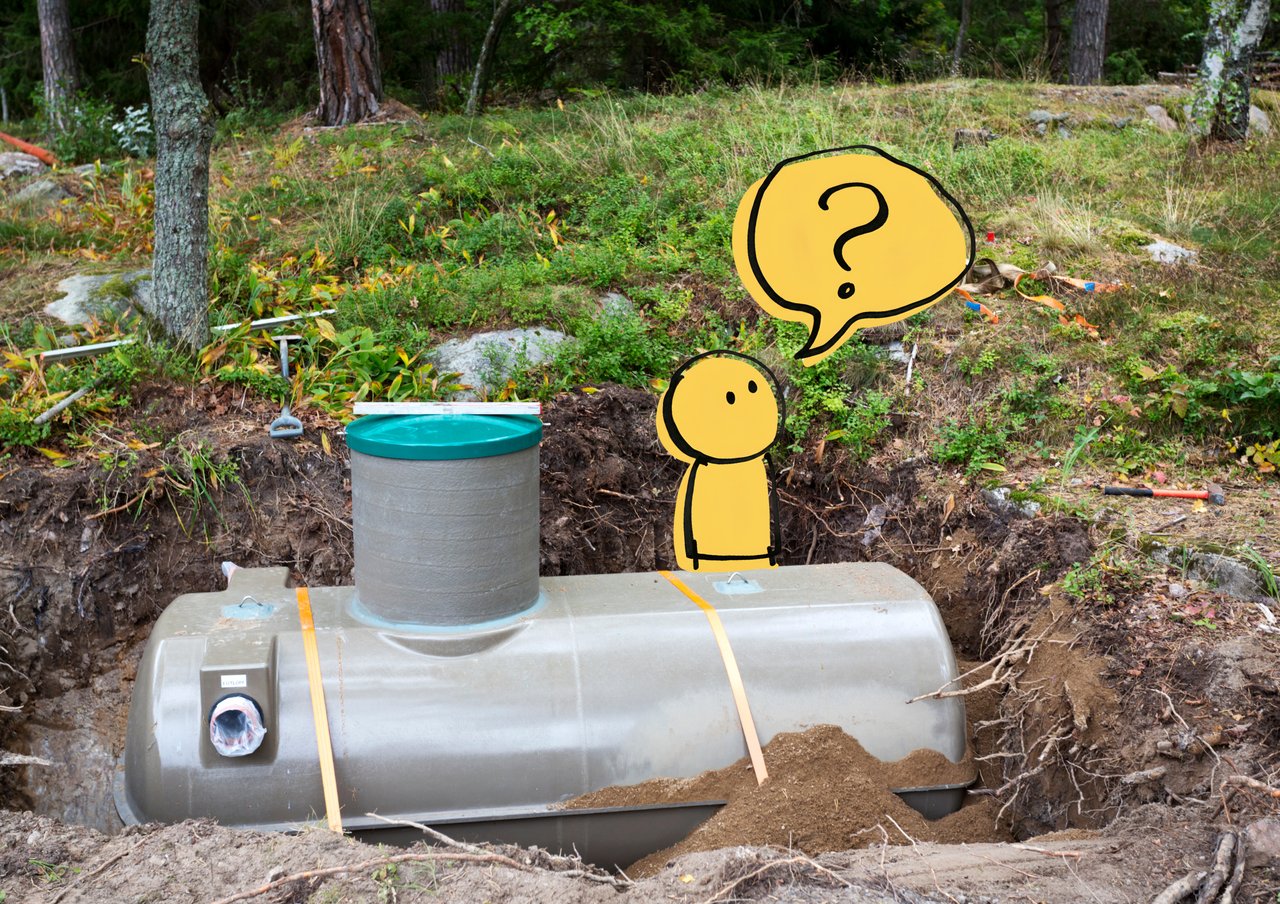
Buying a home with a septic system is very common in Newtown, but the septic inspection should never be treated as a quick checkbox. The system is one of the most important and potentially expensive parts of the property. A careful review can help you understand its present condition, how it has been maintained and whether the site appears to have options for future repair.
Start with the records. Ask the Newtown Health District for any available septic information, including the as-built plan, permits, repair history and approved bedroom count. The as-built can help identify the location of the tank and leaching area. It may also reveal whether additions or landscaping were placed near important components after the system was installed.
Next, hire a qualified septic professional to inspect the system. The tank should be opened so the inspector can examine its visible condition, baffles, covers and liquid levels. Ask whether the tank shows cracking, corrosion, leakage, root intrusion or other signs of deterioration. The inspector should also evaluate the distribution system and leaching area for warning signs such as surfacing sewage, unusually wet soil, strong odors or lush patches of grass.
Maintenance history matters. Find out when the tank was last pumped and whether the seller has receipts. A lack of records does not automatically mean the system is failing, but it leaves more uncertainty. Household size and water use can affect how a system performs, so an inspection offers a snapshot, not a lifetime guarantee.
Pay close attention to the property around the system. Decks, pools, sheds, driveways, patios and large plantings can limit access or interfere with the septic area. Buyers should also ask where a future replacement area may be located. This becomes especially important if you are considering a pool, addition or major renovation.
Finally, make sure the home’s stated bedroom count agrees with available approvals. Septic capacity is generally tied to bedrooms, so a finished room being used as a bedroom does not necessarily mean it is approved as one. Your agent, attorney and inspection professionals can help you review the documents and decide whether more investigation is needed.
A septic system should not scare you away from the right Newtown home! The goal is simply to understand what you are buying, budget realistically and avoid surprises after closing.
Buyer Checklist
· Request the septic as-built and permit history.
· Confirm the approved bedroom count.
· Hire an experienced septic inspector—not only a general home inspector.
· Ask when the tank was last pumped and request receipts.
· Inspect the tank, baffles, covers, distribution components and leaching area.
· Look for wet areas, odors, backups or suspiciously green grass.
· Identify the primary and potential reserve areas before planning a pool or addition.